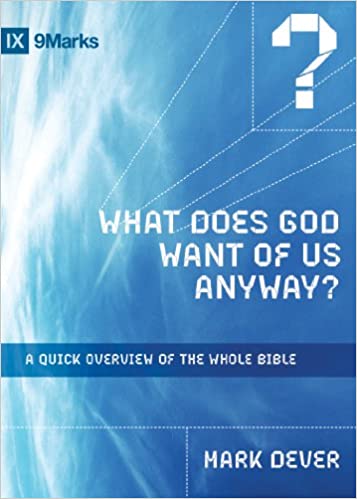
One of the most common questions that humans must wrestle with is why are we here? This question is often preceded by where did we come from? Taken together, our answers to these questions shape much of what we think of ourselves and the world that we live in. But what does God think about those questions? You might even phrase the question the same way that Mark Dever does in his book titled What Does God Want of Us Anyway? The Bible answers both of these questions, and many others, and Dever aims to show what God’s purposes and plans are for us.
The subtitle “A Quick Overview of the Whole Bible” is starkly accurate. Clocking in at just 128 pages in a small hardcover edition published by Crossway, this book is just the right length for anyone to pick up and read. Providing a birds-eye view of the scope of the entire Bible is a daunting task for such a small book, but Dever handles it admirably.
Particularly helpful is the author’s viewpoint of the Old Testament laying out the promises that God made, and the New Testament bringing all of those promises to fulfillment. What God says he will do, he will do; and you can trust him. That is one of the great strengths of this book—the author calls you to trust in the Creator God because of Jesus.
In describing the summary of the whole Bible, Dever notes “this is the hope in which we can trust, because this is the hope that will not disappoint. And this is the chief concern of the whole Bible, Old Testament and New: God’s restored relationship with his people for his own glory and his own pleasure.”
“This is the chief concern of the whole Bible, Old Testament and New: God’s restored relationship with his people for his own glory and his own pleasure.”
Mark Dever
Dever breaks the book up into three categories, all of which have had thousands of pages of books written about them in their own right. He takes about half of the book to tackle the first category, the message of the whole Bible, which encompasses both the second and third categories. He then spends the remainder of the book honing in on those second and third categories, the message of both the Old and New Testaments.
Here are the three categories…
- The Message of the Whole Bible
- The Message of the Old Testament: Promises Made
- The Message of the New Testament: Promises Kept
Here are some of my favorite lines from the book…
We have seen that the ‘covenant’ language in the Bible is not cold, legal language, but relational language.
Page 43
The very thing that God wanted of his people in the Old Testament, that he planned toward, that they never achieved on their own, God now has through Christ: a remnant, a nation, a people to praise him with lips and lives of holiness. He has a new-covenant people who are genuinely holy in Christ.
Page 46
The New Testament provides the answer to the riddle posed in the Old. Jesus’ death on the cross allowed God to both forgive and punish. Christ forms the new covenant—he reestablishes a relationship between God and his people—with his blood.
Page 105
What Does God Want of Us Anyway? is a helpful summary of the Bible’s overall story. Even though I’m familiar with the Bible’s major storyline, I went into it looking for a succinct overview of the entire Bible, and I was not disappointed. This would be a helpful book if you’re looking to clarify the big picture storyline of the Bible, either for yourself or to help you explain it to others.
 Gospel Awareness